How to Transfer Property in Dubai as an Expat (2026 Guide)

Dubai recorded AED 917 billion in total real estate activity in 2025 – a figure spanning sales, mortgage registrations, gift transfers, and other transaction types. Real estate investments specifically exceeded AED 680 billion across roughly 258,600 deals, up 29% in value and 20% in volume from 2024, while the investor base grew to around 193,100 people – a 24% year-on-year increase (Dubai Land Department / Gulf News, January 2026).

Whether you’re buying your first apartment in Dubai Marina, selling a villa with an outstanding mortgage, or gifting a property to your spouse, the transfer mechanics are broadly the same: a trustee office, a set of DLD fees, and a title deed that changes hands once everything clears. This guide walks through each scenario step by step, with the actual 2026 fee figures from DLD’s own eServices portal.

Key Takeaways
  • Standard property transfers in Dubai carry a 4% DLD fee plus trustee, admin, and NOC charges – typically 6-7% of the sale price in total (Dubai Land Department, 2026).
  • Gifting property to a spouse, parent, or child cuts the DLD fee to just 0.125% of the assessed value, with a minimum of AED 2,000 (Dubai Land Department, 2026).
  • In 2025, off-plan deals made up roughly 65% of all Dubai transaction volume (ValuStrat, December 2025).
  • Dubai has no capital gains tax, no annual property tax, and no transfer tax beyond DLD registration charges – confirm home-country tax obligations separately with a cross-border adviser.
  • Properties valued at AED 2 million or more may qualify the buyer for a 10-year UAE Golden Visa – worth factoring into any transfer decision from the moment the title deed changes hands.

What Does "Property Transfer" Actually Mean in Dubai?

In 2026, a property transfer in Dubai is the legal process of moving a title deed from one owner to another at a DLD-registered trustee office, recorded in the Dubai Land Department’s central registry (Dubai Land Department, 2026). It applies to any sale, gift, or inheritance involving a property in a designated freehold area.

Foreign nationals can only buy, sell, or transfer property outright in areas the Dubai government has designated as freehold zones – think Dubai Marina, Downtown Dubai, Palm Jumeirah, Business Bay, and Jumeirah Village Circle, among dozens of others. Outside those zones, expats can usually only hold long-term leasehold rights, not full ownership.

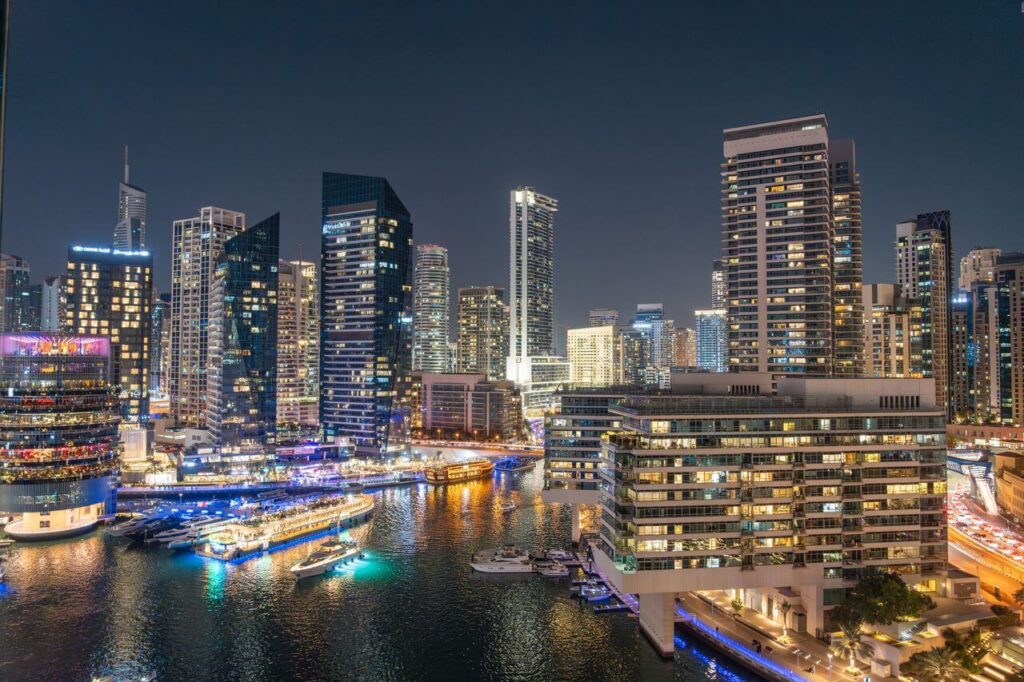
dubai-marina

The transfer itself doesn’t happen at a government counter in the way you might expect. Instead, it’s processed through one of Dubai’s licensed Trustee Offices (sometimes called Real Estate Registration Trustees), which act on behalf of the DLD. Both parties – or their legal representatives – need to attend, along with the agent if one was involved.

Here’s the part that surprises a lot of newcomers: the actual transfer appointment, once all your documents and approvals are in order, usually takes well under an hour. It’s the preparation – getting the No Objection Certificate (NOC), clearing the mortgage, and arranging the manager’s cheques – that eats up most of the timeline, often one to three weeks.

How Much Does It Cost to Transfer Property in Dubai?

A standard resale transfer in Dubai costs around 4% of the sale price in DLD fees alone, plus several smaller administrative charges that bring the realistic total closer to 6-7% once agency commission is included (Dubai Land Department, 2026). For a property selling at AED 2 million, that’s roughly AED 120,000-140,000 in combined costs.

The Sale and Purchase Agreement (Form F) determines who pays the DLD fee, though Dubai market convention is for buyers to bear the full 4% – it’s almost always written into the contract that way. On top of the headline fee, expect:

  • Title deed issuance fee: AED 250
  • Property/land map fee: AED 250 for apartments and villas (AED 100-225 for land)
  • Knowledge and innovation fees: AED 10 each per drawing
  • Trustee office transfer fee: AED 4,200 (inclusive of 5% VAT) for properties valued at AED 500,000 or above; AED 2,100 for properties below that threshold (Dubai Land Department, 2026). Fees may vary slightly depending on transaction type.
  • NOC fee from the developer: typically AED 500-5,000, depending on the developer; some premium developers charge above this range
  • Agency commission: usually 2% of the sale price, paid by the buyer


If there’s a mortgage involved – either the buyer is financing the purchase or the seller needs to clear an existing loan – add a mortgage registration fee of 0.25% of the loan amount, plus another AED 250 mortgage title deed fee and AED 250 map fee (Dubai Land Department, 2026).

Where Your Dubai Property Transfer Fees Go (AED 2M Property) Donut chart breakdown of estimated transfer costs for a resale apartment valued at AED 2 million: DLD transfer fee 4% equals AED 80,000 (60.5% of total fees); agency commission 2% equals AED 40,000 (30.3%); mortgage registration 0.25% equals AED 5,000 (3.8%); trustee, NOC and admin fees equal AED 7,230 (5.5%). Total estimated fees approximately AED 132,230. Source: Dubai Land Department eServices, 2026. Total Fees AED 132,230 DLD Transfer Fee (4%) AED 80,000 · 60.5% Agency Commission (2%) AED 40,000 · 30.3% Mortgage Registration (0.25%) AED 5,000 · 3.8% Trustee, NOC & Admin Fees AED 7,230 · 5.5% Source: Dubai Land Department eServices fee schedules (dubailand.gov.ae), 2026
Estimated transfer costs for a resale apartment valued at AED 2 million, including a mortgage registration. Source: Dubai Land Department, 2026.

One detail worth clarifying before you finalise your budget: several UAE lenders tightened their financing policies during 2025, with some now requiring buyers to fund DLD registration fees and brokerage commissions separately rather than rolling them into the mortgage. Lending practices vary between banks, so confirm the current position with your lender well before transfer day – these costs may need to be available in cash or via manager’s cheque.

What Documents Do You Need for a Property Transfer?

Both buyer and seller need a specific document set ready before booking a trustee office appointment, and missing even one – like an expired Emirates ID or an unsigned NOC – can push your slot back by days (Dubai Land Department, 2026). Preparing everything in advance is the single biggest time-saver in this whole process.

For a typical resale transfer, you’ll generally need:

From the seller:
  • Original title deed
  • Passport and Emirates ID (or visa page, for non-residents)
  • No Objection Certificate (NOC) from the developer, confirming no outstanding service charges
  • Memorandum of Understanding (MOU) / Form F signed by both parties
  • Mortgage clearance letter, if applicable
From the buyer:
  • Passport and Emirates ID (or valid entry visa for overseas buyers)
  • Manager’s cheque(s) for the property price, made payable to the seller
  • Manager’s cheque for DLD fees, payable to “Dubai Land Department”
  • Proof of funds or mortgage offer letter, if financing

If either party can’t attend in person, a Power of Attorney (POA) lets a representative sign on their behalf. For POAs executed outside the UAE, the process typically involves notarisation in the home country, attestation at the UAE Embassy or Consulate in that country, and then authentication by the UAE Ministry of Foreign Affairs before the document can be used locally. Exact requirements vary by country, so confirm the attestation chain with a UAE-registered legal practitioner or the relevant embassy before starting the process. This arrangement is common for overseas investors who bought off-plan and are selling before they’ve ever visited the unit.

A 2025 Dubai REST app update means most of this can now be initiated digitally before you even reach the trustee office, with the in-person appointment reserved largely for signatures and payment handover.

Step-by-Step: How to Transfer Ownership at the DLD Trustee Office

The actual ownership transfer happens in a single appointment at a registered trustee office, and once your NOC and mortgage clearance are sorted, the in-office part typically takes 30-45 minutes (Dubai Land Department, 2026). Here’s how the day usually unfolds.

  1. Sign the MOU (Form F) – Buyer and seller agree on price, deposit, and timeline, usually through the agent. This sets the transfer date.
  2. Apply for the developer NOC – The seller (or agent) submits a request to the developer, who confirms the property has no outstanding service charges. This step alone can take anywhere from same-day to two weeks, depending on the developer.
  3. Clear or transfer the mortgage – If the seller has a mortgage, their bank issues a liability letter and coordinates settlement on transfer day.
  4. Book the trustee office appointment – Done via the Dubai REST app or directly with a trustee office. Both parties (or their POA holders) need to be present with original documents.
  5. Pay the fees and sign the transfer form – Manager’s cheques are exchanged: one for the property price (to the seller), one for the DLD transfer fee, and any others for mortgage registration or NOC.
  6. Receive the new title deed – The trustee office processes the transfer in the DLD system on the spot, and the new title deed is typically issued within minutes to a few hours.

What this looks like in practice: Buyers who’ve been through the process describe the trustee office appointment itself as almost anticlimactic – a quiet room, a stack of cheques, and a printer. The stress is almost entirely front-loaded into the NOC and mortgage clearance steps that happen in the days before.

Is it worth using a conveyancing service instead of doing this yourself? For straightforward cash purchases, many expats handle it directly with their agent. For anything involving a mortgage payoff, a POA, or an overseas seller, a property lawyer or registered conveyancer can save real time chasing paperwork.

How Does Mortgage Transfer Work When Selling a Mortgaged Property?

If you’re selling a property with an outstanding home loan, your bank must issue a liability letter and coordinate a same-day settlement at the trustee office, with a registration fee of 0.25% of the mortgage amount payable to the DLD (Dubai Land Department, 2026). The mortgage doesn’t follow the property to the new owner – it gets cleared as part of the sale.

Here’s how it typically works: the buyer’s manager’s cheque for the purchase price is split so that a portion goes directly to the seller’s bank to settle the outstanding loan balance, and the remainder goes to the seller. The seller’s bank representative often attends the trustee office appointment in person to confirm receipt and release the mortgage, after which the DLD removes the mortgage charge from the title deed in the same session.

This is also where the financing question matters most in practice. Several UAE lenders tightened their policies during 2025, with some now requiring that DLD fees and brokerage commissions be funded from the buyer’s own cash rather than added to the mortgage. If those costs sit outside your loan, budget for an additional 5-6% of the purchase price in upfront cash on top of your deposit. Confirm current lending criteria directly with your bank before locking in your purchase numbers.

For buyers taking out a new mortgage to fund the purchase, the same 0.25% registration fee applies, but it’s registered as a fresh mortgage on the title deed rather than a transfer of an existing one. Either way, the trustee office handles the DLD-side paperwork in the same appointment as the ownership transfer – there’s no separate visit required.

How Do You Gift or Inherit Property in Dubai?

Gifting a property to a spouse, parent, or child in Dubai costs just 0.125% of the DLD-assessed value (minimum AED 2,000) instead of the standard 4% transfer fee – a saving that can run into tens of thousands of dirhams on a high-value property (Dubai Land Department, 2026). This reduced “Hiba” (gift) rate applies to first-degree family relationships – spouses, parents, and children – as recognised under DLD gift transfer regulations. Confirm current eligibility criteria with the DLD or a UAE property lawyer before proceeding, as the applicable regulatory framework should be verified with a qualified legal practitioner.

The process mirrors a standard transfer in most respects – same trustee office, same NOC requirement from the developer – but the fee calculation is based on the DLD’s own valuation of the property rather than a declared sale price, since no money is technically changing hands. Any existing mortgage typically needs to be cleared or formally restructured before a gift transfer can proceed.

Inheritance works differently. For expatriates, the outcome depends on several factors that interact in ways that aren’t always obvious:

  • If a DIFC will exists: The DIFC Wills Service Centre is the most common route for non-Muslim expats. A registered DIFC will allows property and other UAE assets to be distributed per the owner’s wishes rather than by default UAE succession rules. Once probated through the DIFC Courts, the resulting order can be used to initiate a DLD inheritance title transfer.
  • If an Abu Dhabi Judicial Department will exists: An alternative available to expats based in Abu Dhabi, operating under a comparable framework.
  • If no registered will exists: The estate passes through UAE Personal Status Law and court proceedings – a process that can take months and involve legal costs far exceeding the DLD transfer fees themselves. Outcome varies by nationality, and heirs should seek UAE legal advice early.


Once the appropriate legal documentation is approved, the DLD’s Inheritance Title Transfer service charges a flat AED 1,000 base fee per property, plus the usual AED 250 title deed fee, AED 100-250 map fee, and roughly AED 130 plus VAT in trustee/service partner fees (Dubai Land Department, 2026). DLD states the transfer step itself takes around 25 minutes once documentation is in order.

Inheritance outcomes vary depending on nationality, the existence of a registered will, and the applicable succession framework. Registering a DIFC will while you’re alive remains, in practical terms, the cheapest “transfer fee” you’ll ever pay.

Do Property Transfers in Dubai Attract Tax?

This is one of the most common questions from first-time expat buyers – and the short answer is: very little.

Dubai currently imposes no capital gains tax on property sales, no annual property ownership tax, and no transfer tax beyond the DLD registration charges covered in this guide. If you buy a property for AED 2 million and sell it three years later for AED 2.8 million, the AED 800,000 gain is yours in full. The only costs on exit are the DLD fee, trustee charges, and agency commission.

This applies to both UAE residents and non-residents, and to individuals and corporate entities alike (though corporate ownership structures introduce their own legal considerations worth confirming with a UAE-registered adviser).

What does exist in the fee structure: a 5% VAT is embedded in certain DLD service charges – the trustee office fee, for example, is quoted inclusive of VAT. That’s already reflected in the figures used throughout this guide.

One important caveat for expats from certain countries: the absence of Dubai-side tax doesn’t eliminate home-country obligations. UK residents, for example, may be liable for capital gains tax on gains from overseas property under HMRC rules. If you’re unsure whether your home country taxes overseas property gains, take advice from a cross-border tax adviser before assuming your Dubai profit is completely tax-free end to end.

Can a Property Transfer Qualify You for a UAE Golden Visa?

For many expat buyers, a Dubai property transfer isn’t just a real estate transaction – it can also be the starting point for long-term UAE residency. Property investors may qualify for a 10-year UAE Golden Visa when the following conditions are met:

  • The property has a purchase price or DLD-assessed value of AED 2 million or more
  • The property can be ready or off-plan – off-plan units are eligible, subject to documentation from the developer confirming the purchase value
  • Mortgaged properties may qualify, but your bank typically needs to confirm the loan structure and outstanding balance – check the current requirements with your lender before applying
  • Jointly owned properties may also qualify, though each co-owner’s share is assessed individually against the AED 2 million threshold

Golden Visa applications are handled through the Federal Authority for Identity, Citizenship, Customs and Port Security (ICP) – not the DLD. The property transfer is a prerequisite: you’ll need the new title deed (or Oqood certificate for off-plan units) as part of the residency application.

Timing matters if residency is part of your plan. Complete the transfer first, obtain the title deed, and then initiate the visa application. There’s no minimum holding period before applying, but you’ll need to maintain ownership to retain eligibility.

What's Driving Dubai's 2026 Property Market?

Dubai recorded AED 917 billion in total real estate activity in 2025 – a figure spanning sales, mortgage registrations, gift transfers, and other transaction types. Property sales specifically reached approximately AED 680 billion across roughly 258,600 deals, up 29% in sales value and 20% in volume from 2024, with the investor base growing to around 193,100 people – a 24% increase year-on-year (Gulf News, January 2026).

For anyone planning a transfer in 2026, that growth has direct, practical effects on timelines. More transactions mean trustee offices and developer NOC departments are busier – book appointments and request NOCs earlier than you might expect, especially during peak season (October to March). It also means more competition among buyers for well-located resale units, which can shorten negotiation windows.

A notable 2025 trend: off-plan properties accounted for roughly 65% of total transaction volume and 53% of total transaction value across the year, with ValuStrat recording off-plan sales reaching as high as 76% of residential transactions by December 2025 (ValuStrat Price Index, December 2025).

Off-Plan vs Secondary Market Share in Dubai (2025) Grouped bar chart: Volume share - off-plan 65%, secondary market 35%. Value share - off-plan 53%, secondary market 47%. Source: ValuStrat Price Index, December 2025. 65% 35% 53% 47% Volume Share Value Share Off-Plan Secondary (Ready) Market Source: ValuStrat Price Index, December 2025
Off-plan transactions outpaced the secondary market in both volume and value across 2025. Source: ValuStrat, December 2025.

If you bought off-plan, your “transfer” eventually involves converting an Oqood certificate to a full title deed once the developer completes handover. These are two distinct DLD documents with different implications:

StageDocumentNotes
During constructionOqood CertificateInterim DLD registration; confirms the off-plan purchase is recorded
Post-handoverTitle DeedFull ownership record; required for Golden Visa applications and resale transfers

The Oqood-to-title-deed conversion is a separate DLD process from a resale transfer, with its own, typically lower, fee structure.

Foreign investors make up a significant share of Dubai’s buyer pool. Industry reports consistently identify buyers from India, the United Kingdom, China, Saudi Arabia, and Russia among the largest overseas investor groups – though precise nationality breakdowns are not published by the DLD, and figures vary meaningfully between sources.

Dubai-property market

What's Driving Dubai's 2026 Property Market?

The most expensive mistake expats make is underestimating the cash needed on transfer day – between the 4% DLD fee, agency commission, trustee fees, and the possibility that your lender requires DLD costs outside the mortgage, buyers often need 8-9% of the property price in liquid funds, not just the down payment.

A few other recurring issues:

  • Leaving the NOC request too late. Some developers take up to two weeks to issue an NOC, especially around year-end when transaction volumes spike.
  • Assuming a verbal agreement is binding. Until the MOU (Form F) is signed by both parties, either side can walk away – and deposits can become a dispute.
  • Not checking service charge arrears. The NOC process exists specifically to catch unpaid service charges; sellers with arrears face delays while these are settled from sale proceeds.
  • Skipping a DIFC will. Expats who die without a registered will can leave heirs facing months of court proceedings before any inheritance transfer can begin.
  • Using an unregistered broker. Only deal with RERA-registered agents. You can verify any agent’s licence and permit number directly through the Dubai REST app before signing anything – unregistered intermediaries have no standing in a DLD dispute.
  • Missing the Golden Visa window. If your property meets the AED 2 million threshold, the title deed issued at transfer is the key document for the residency application. Many buyers don’t revisit this until months after they could have applied.

Frequently Asked Questions

The trustee office appointment itself takes 30-45 minutes once all documents are ready, but the full process – including the developer NOC and any mortgage clearance – usually takes one to three weeks (Dubai Land Department, 2026). Off-season transfers with no mortgage can sometimes complete in under a week.

Yes – in designated freehold zones, foreign nationals (resident or not) can hold full ownership of property, including the land in villa communities. Outside these zones, foreigners are generally limited to long-term leasehold arrangements rather than freehold title.

The standard DLD transfer fee remains 4% of the sale price. While the SPA can assign responsibility differently, market convention is for buyers to bear the full 4%, plus smaller fixed charges for the title deed (AED 250) and property map (AED 100-250) (Dubai Land Department, 2026).

Gifting to a spouse, parent, or child reduces the DLD fee from 4% to 0.125% of the assessed value (minimum AED 2,000) – on an AED 3 million property, that’s roughly AED 3,750 instead of AED 120,000 (Dubai Land Department, 2026). The reduced rate only applies to first-degree family transfers as recognised by the DLD.

No. Dubai currently has no capital gains tax on property sales, no annual property ownership tax, and no transfer tax beyond the standard DLD registration charges. This applies to both residents and non-residents. Your home country may still tax gains from overseas property – take cross-border tax advice if you’re unsure.

Yes, if the property’s purchase price or DLD-assessed value is AED 2 million or more. Ready and off-plan properties may both qualify, and mortgaged properties can be eligible subject to bank documentation. Applications go through the ICP (Federal Authority for Identity, Citizenship, Customs and Port Security), not the DLD.

It’s not legally required for most resale transactions – many expats complete transfers through their agent and the trustee office directly. However, a property lawyer is strongly recommended for inheritance cases, Power of Attorney transfers, off-plan disputes, or any transaction involving an overseas party who can’t attend in person.

Conclusion

Transferring property in Dubai as an expat in 2026 comes down to three things: getting your documents and NOC sorted early, budgeting for the full 6-9% in fees (not just the 4% headline DLD charge), and choosing the right pathway – standard sale, gift, or inheritance – since the fee difference between a 4% sale and a 0.125% gift transfer can be enormous for family transfers.

With the market at record highs (AED 917 billion in total real estate activity, AED 680 billion in sales, in 2025) and some lenders tightening financing requirements, preparation matters more than it did a few years ago. Factor in the zero-tax environment and potential Golden Visa eligibility if your property meets the AED 2 million threshold. Book your trustee office appointment once your NOC and mortgage clearance are confirmed, and you’ll likely find the in-person part of the process is the easiest step of all.

Sources
  1. Dubai Land Department, Request for Transfer of Ownership eService, retrieved 2026-06-11 — dubailand.gov.ae
  2. Dubai Land Department, Mortgage Registration eService, retrieved 2026-06-11 — dubailand.gov.ae
  3. Dubai Land Department, Registering the Sale of a Mortgaged Property, retrieved 2026-06-11 — dubailand.gov.ae
  4. Dubai Land Department, Inheritance Title Transfer eService, retrieved 2026-06-11 — dubailand.gov.ae
  5. Dubai Land Department, Property Gift Registration eService, retrieved 2026-06-11 — dubailand.gov.ae
  6. Gulf News, “Dubai’s real estate market hits record Dh917b in 2025”, January 2026 — gulfnews.com
  7. Gulf News, “Dubai property market closes 2025 with record Dh682.5 billion in sales”, January 2026 — gulfnews.com
  8. ValuStrat, VPI Dubai Residential Capital Values – December 2025 — valustrat.com
  9. Property Finder, “Gifting Property in Dubai”, 2025 — propertyfinder.ae
Need Help?